
Cast or extruded acrylic
Both are called acrylic and both look the same. The difference only shows when engraving, when gluing, and at the caliper.
Reviewed on 31 August 2026
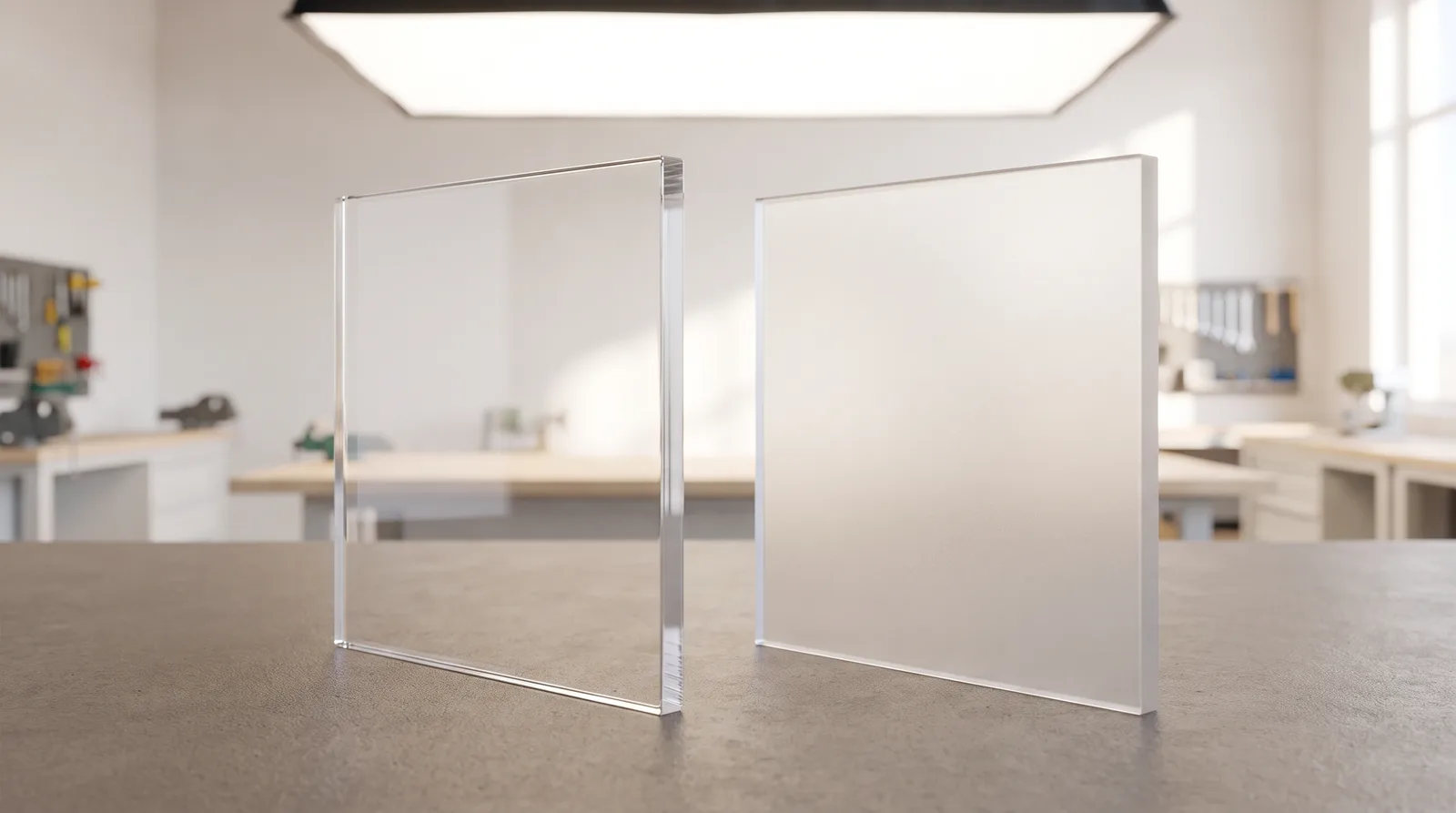 AI-generated
Acrylic — chemically polymethyl methacrylate, PMMA for short — is manufactured in two ways. In casting, the liquid plastic is poured between two glass plates and left to cure there; that produces GS material. In extrusion, the melt is forced through a slot die and drawn off as a continuous web; that produces XT.
The two processes create the same material with a different molecular structure — and from that follow all the practical differences.
The differences at a glance
| Property | GS (cast) | XT (extruded) |
|---|---|---|
| Engraving | high-contrast, clean white | flatter, less brilliant |
| Thickness tolerance | large — up to ±0.7 mm at 3 mm | considerably tighter |
| Stress cracking | less sensitive | more sensitive, especially with solvents |
| Polishing and milling | good, edges come out clear | less forgiving |
| Thermoforming | needs more heat | easier to form |
| Price | higher | lower |
| Colour and surface range | very large | limited |
When XT is the better choice
XT plays to its strength when the thickness has to be right. Because the material is drawn off in a continuous process, it is more uniform than cast — and thickness tolerance is the point at which most fits in GS fail.
Price also speaks for XT on simple, unengraved parts: covers, protective panes, dividers. Where neither engraving contrast nor a particular colour matters, XT is the more economical choice.
When the thickness really has to be right
For fits that need to sit accurately to a tenth of a millimetre there is precision cast acrylic with a thickness tolerance of ±0.1 mm instead of ±0.7 mm. That is the most direct route when grooves, fingers or stacked layers have to work out at nominal size — more expensive per cut, but considerably cheaper than a second faulty batch.
What both have in common
Both types cut cleanly and produce a smooth, slightly flame-polished edge that needs no reworking. Both are UV-stable and do not yellow outdoors. And both come from us with protective film that should stay on until assembly.
The same warning applies to both: no superglue, no alcohol- or ammonia-based cleaners, no assembly under constraint — otherwise stress cracks form.
Frequently asked questions
- What is the difference between cast and extruded acrylic?
- GS is cast, XT extruded. GS engraves with more contrast, is more forgiving when gluing and comes in more colours; XT has the tighter thickness tolerance and is cheaper.
- Which acrylic engraves better?
- GS. The engraving comes out clean and high-contrast white there, whereas on XT it looks flatter. For lettering and logos, GS is the better choice.
- Why is the thickness of my acrylic sheet not exact?
- Cast acrylic permits a tolerance of ± (0.4 + 0.1 × thickness) mm — up to ±0.7 mm at 3 mm. When the dimension matters, use XT or precision cast acrylic at ±0.1 mm.
- Is acrylic UV-stable?
- Yes, both types. PMMA is the most UV-stable of the common transparent plastics and does not yellow even after years outdoors.
Read on
Sources
- Manufacturer material data sheets (PLEXIGLAS GS and XT)
- Our own production: engraving and cutting results of both types, 2019–2026