
Felt
1 variant, thicknesses: 3 mm. Cut on the P1–P3 and Q formats, price shown live while you design.
- Laser cutting
- Vector engraving
- Raster engraving
kerf
The laser vaporizes material — the cutting gap varies with material and thickness. Cuts run centered on the drawn line; for shape.tools products we factor the kerf into your dimensions automatically.More in the glossary →P1–P3 and Q sheet formats
Our four sheet formats: P1 = 181 × 181 mm, P2 = 384 × 384 mm, P3 = 790 × 384 mm, Q = 900 × 450 mm. Your design has to fit on one of the sheets. For scale: a vinyl record cover sits between P1 and P2.More in the glossary →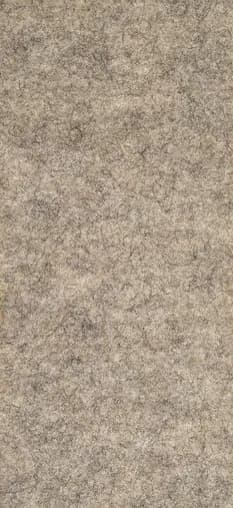
How Felt lasers
Standardised photos of the real material — same motifs, same light, so you can compare materials.
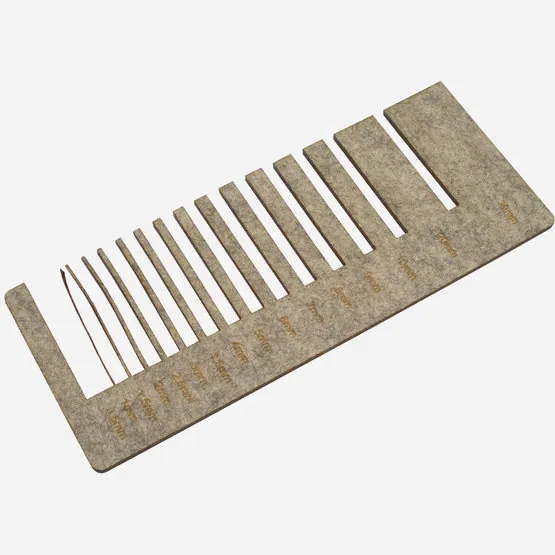
Test cuts 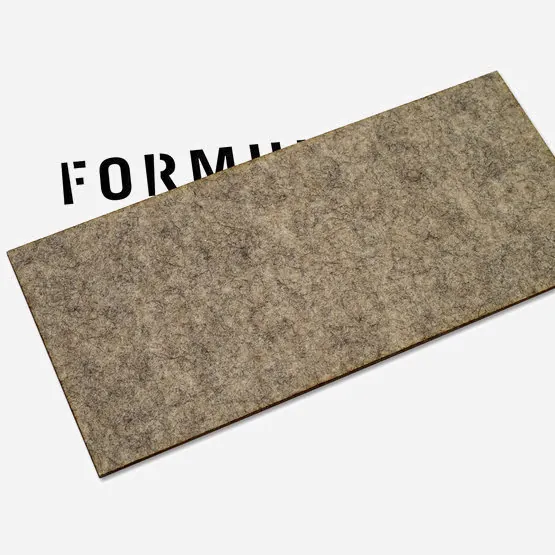
Transparency 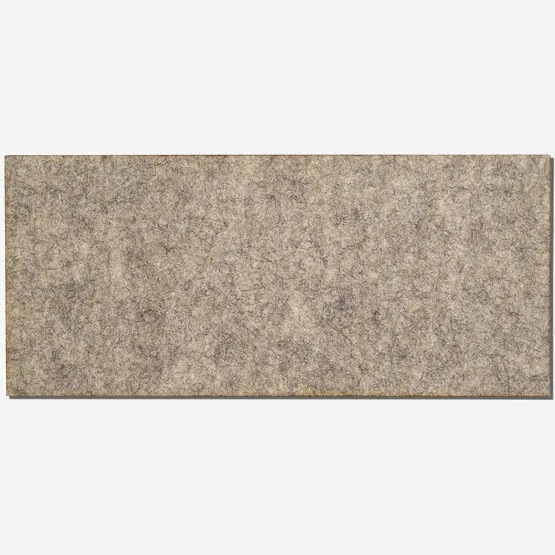
Top view 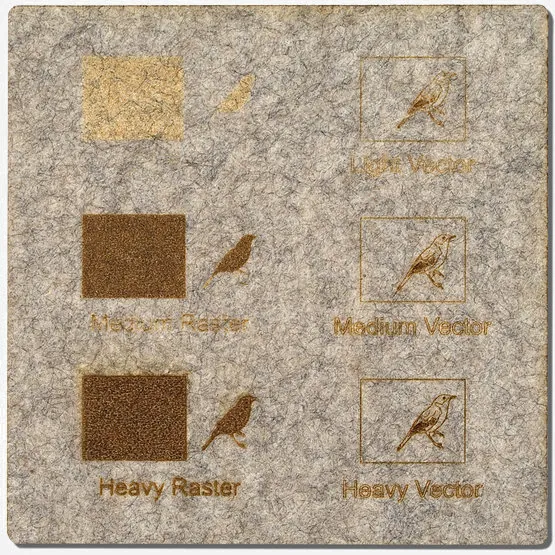
Engraving 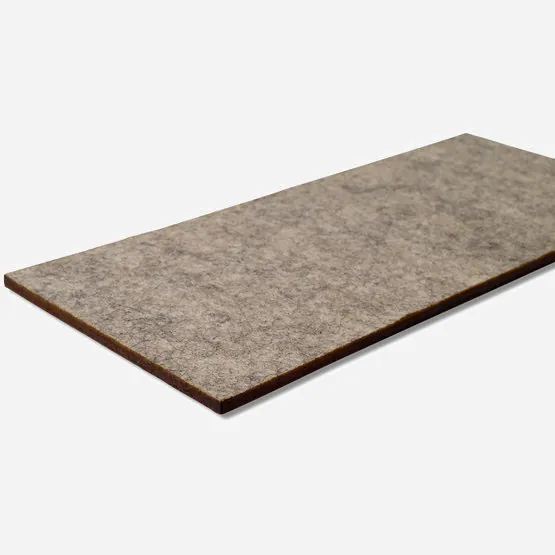
Cut edges
raster engraving
The laser fills an area line by line — like a printer. Ideal for logos and larger motifs. In your file: black filled areas, RGB(0, 0, 0).More in the glossary →vector engraving
The laser traces a line and engraves it into the material — precise, ideal for fine contours. In your file: red hairlines, RGB(255, 0, 0).More in the glossary →Good to know
Description
100% wool felt from sheep’s wool: UV-resistant, abrasion-proof, temperature-stable from approx. −40 to +110 °C; it does not burn but only chars above 200 °C. Elasticity, breathability, strong insulation against heat, cold and sound, pH neutrality and shape retention make it extremely versatile.
Wool felt is practically indestructible and keeps its properties for decades. Cut edges do not fray, and the colours are vivid and non-toxic.
Lasering & smell
Being a natural product, wool felt develops a sharp burnt smell when lasered. The cut edges singe and turn brown — clearly visible on light colours.
To wash out smell and edges you don’t need expensive dry cleaning: a COLD solution of wool detergent and a brush will do. Air-dry afterwards and blot residual moisture with a dry cloth — the felt shrinks a little in the process.
Engraving
Large-area raster engravings are not recommended. Generally choose a heavy engraving — a light one is barely visible on the fibre structure.
Joining
Felt is an eco-friendly, renewable material and joins beautifully with classic sewing techniques.
Variants & sheet prices
Category: Other materials
| Color / finish | Thickness | P1 (181 × 181 mm) | P2 (384 × 384 mm) | P3 (790 × 384 mm) | Q (900 × 450 mm) |
|---|---|---|---|---|---|
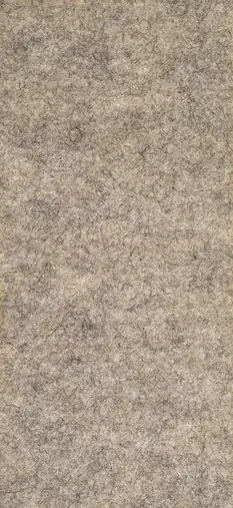 light grey mottled, 100% wool light grey mottled, 100% wool | 3 mm | €5.70 | €15.90 | €26.80 | €35.78 |
Sheet prices incl. VAT. Your cut costs sheet plus laser time — you see the fixed price live when uploading or modelling.
Quick answers
Which thicknesses does Felt come in?
3 mm — 1 thicknesses across 1 variants of colour and finish. You pick the thickness while designing; it drives both price and cutting time.
Which sheet sizes do you cut on?
Four formats: P1 181 × 181 mm, P2 384 × 384 mm, P3 790 × 384 mm, Q 900 × 450 mm. Your design has to fit one of these sheets — larger objects get split into several parts.
What does Felt cost?
A sheet starts at €5.70 (P1), €15.90 (P2), €26.80 (P3) and €35.78 (Q), each including VAT. What you pay for is the cutting: area, cutting length, engraving, setup and shipping — calculated before you order.
Can Felt be engraved?
Yes, both as vector engraving and as raster engraving. In your file the colour drives the laser: red hairlines are engraved as lines, black filled areas as surfaces.
Can Felt be bent?
No. Felt cannot be bent with our bending process, so the “Bend” tool is not offered for this material. Acrylic up to 6 mm (except mirror), PET-G and polypropylene can be bent.
Do I get the whole sheet?
No. You receive your cut parts, not the rest of the sheet. The sheet price is the basis for the calculation, not the scope of delivery.
Related materials
More materials from the same catalogue group as Felt — for a direct comparison.
Knowledge for this material
- Allowing for kerf
Why laser-cut tab joints wobble even though the drawing is correct — and how to compensate for the kerf in your file.
- Which material thickness
Why 3 mm is the standard, when 5 mm becomes necessary and why thicker material costs disproportionately more.