
Acrylic glass XT mirror
1 variant, thicknesses: 3 mm. Cut on the P1–P3 and Q formats, price shown live while you design.
- Laser cutting
- Vector engraving
- Raster engraving
kerf
The laser vaporizes material — the cutting gap varies with material and thickness. Cuts run centered on the drawn line; for shape.tools products we factor the kerf into your dimensions automatically.More in the glossary →P1–P3 and Q sheet formats
Our four sheet formats: P1 = 181 × 181 mm, P2 = 384 × 384 mm, P3 = 790 × 384 mm, Q = 900 × 450 mm. Your design has to fit on one of the sheets. For scale: a vinyl record cover sits between P1 and P2.More in the glossary →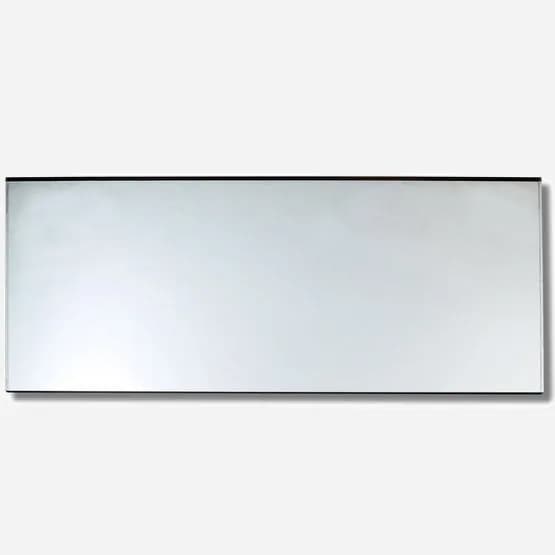
How Acrylic glass XT mirror lasers
Standardised photos of the real material — same motifs, same light, so you can compare materials.
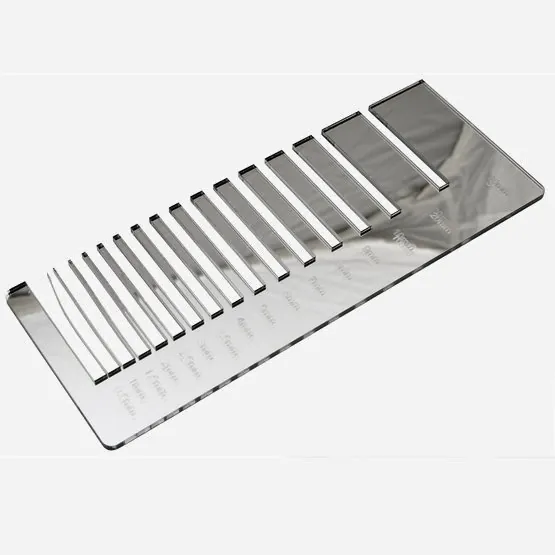
Test cuts 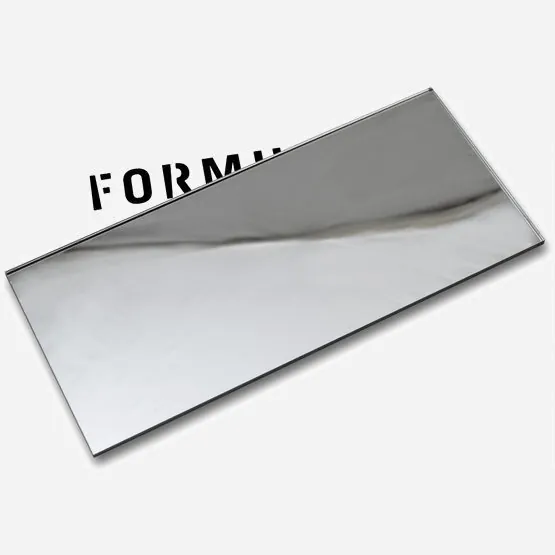
Transparency 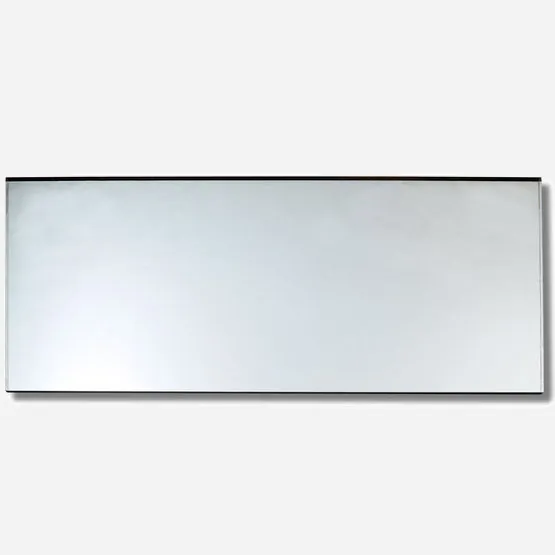
Top view 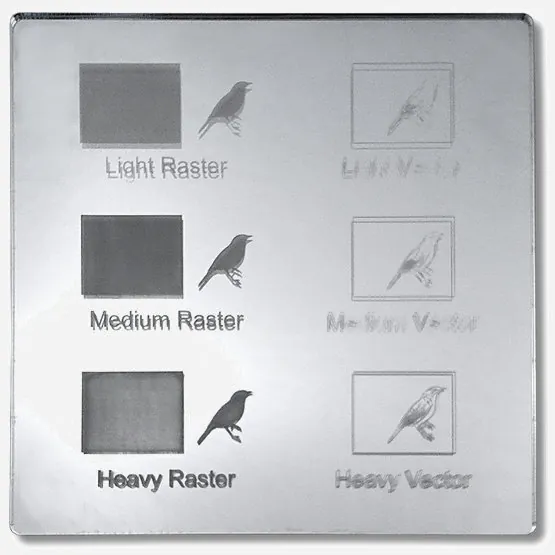
Engraving 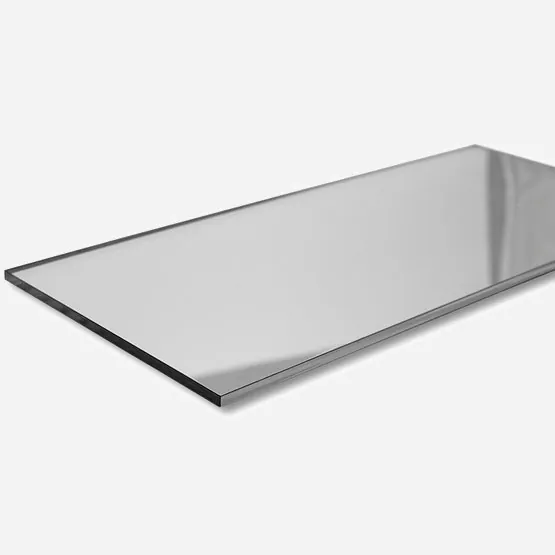
Cut edges
raster engraving
The laser fills an area line by line — like a printer. Ideal for logos and larger motifs. In your file: black filled areas, RGB(0, 0, 0).More in the glossary →vector engraving
The laser traces a line and engraves it into the material — precise, ideal for fine contours. In your file: red hairlines, RGB(255, 0, 0).More in the glossary →Good to know
Description
Mirrored acrylic rivals glass mirrors in brilliance. As with a classic glass mirror, the reflection happens at the back: a very smooth metal film is laminated on, bouncing light back through the transparent acrylic.
An acrylic mirror is lighter and far more break-resistant than glass — perfect wherever breakage is a real risk. In return the surface scratches more easily; for worktop-like surfaces, glass remains the better choice. For walls, make-up mirrors and making rooms feel bigger, the acrylic version is wonderful. Note: indoor use only — its weather resistance outdoors is limited.
Engraving
We recommend only cutting mirrored acrylic. Engravings otherwise sit on the polished front, without the mirror film. Engraving the back removes the mirror layer and turns the acrylic transparent in that spot — use a heavy raster or vector engraving for this and set up your design mirrored.
Processing
Mirrored acrylic can be sawn, milled, drilled and polished. Scratches on the coated back cannot be polished out — store the sheets horizontally and perfectly flat.
The front bonds with the usual acrylic adhesives; on the coated back the bond strength is noticeably lower.
Cleaning
No glass cleaners — they roughen and dull the surface. Use warm water with washing-up liquid or a dedicated plastic cleaner.
Protective film
Acrylic glass always ships with a peelable protective film. Detach small parts from the film carefully — delicate pieces can break otherwise.
Bridges
For small parts under 15 × 15 mm, plan small bridges: interrupt the cut contour by at least 0.5–0.8 mm. All parts then stay safely in the sheet until they reach you — push them out by hand or free them carefully with a craft knife.
Variants & sheet prices
Category: Special acrylic
| Color / finish | Thickness | P1 (181 × 181 mm) | P2 (384 × 384 mm) | P3 (790 × 384 mm) | Q (900 × 450 mm) |
|---|---|---|---|---|---|
mirror | 3 mm | €5.90 | €22.80 | €41.90 | €55.94 |
Sheet prices incl. VAT. Your cut costs sheet plus laser time — you see the fixed price live when uploading or modelling.
Quick answers
Which thicknesses does Acrylic glass XT mirror come in?
3 mm — 1 thicknesses across 1 variants of colour and finish. You pick the thickness while designing; it drives both price and cutting time.
Which sheet sizes do you cut on?
Four formats: P1 181 × 181 mm, P2 384 × 384 mm, P3 790 × 384 mm, Q 900 × 450 mm. Your design has to fit one of these sheets — larger objects get split into several parts.
What does Acrylic glass XT mirror cost?
A sheet starts at €5.90 (P1), €22.80 (P2), €41.90 (P3) and €55.94 (Q), each including VAT. What you pay for is the cutting: area, cutting length, engraving, setup and shipping — calculated before you order.
Can Acrylic glass XT mirror be engraved?
Yes, both as vector engraving and as raster engraving. In your file the colour drives the laser: red hairlines are engraved as lines, black filled areas as surfaces.
Can Acrylic glass XT mirror be bent?
No. Acrylic glass XT mirror cannot be bent with our bending process, so the “Bend” tool is not offered for this material. Acrylic up to 6 mm (except mirror), PET-G and polypropylene can be bent.
Do I get the whole sheet?
No. You receive your cut parts, not the rest of the sheet. The sheet price is the basis for the calculation, not the scope of delivery.
Related materials
More materials from the same catalogue group as Acrylic glass XT mirror — for a direct comparison.
Knowledge for this material
- Cast or extruded acrylic
Cast or extruded: differences in engraving, thickness tolerance, stress cracking and price — and when each makes sense.
- Which material survives outdoors
An honest suitability matrix across our range: what withstands UV, rain and frost — and what is unusable after one winter.
- Allowing for kerf
Why laser-cut tab joints wobble even though the drawing is correct — and how to compensate for the kerf in your file.